

How an MSEd Helps Educators Adapt to Changing Standards

Key Takeaways
- Educational standards continually evolve, requiring teachers to stay current with new approaches and requirements.
- An MSEd empowers teachers through advanced instructional strategies, technology, and inclusivity training.
- Collaboration, leadership skills, and metacognitive training are pivotal in navigating changing standards.
- Staying proactive with an MSEd enables lifelong professional growth and better student outcomes.
Table of Contents
- Understanding the Dynamics of Educational Standards
- The Role of an MSEd in Professional Development
- Enhancing Metacognitive Skills
- Fostering Collaboration and Leadership
- Integrating Technology in the Classroom
- Addressing Diverse Learner Needs
- Staying Informed and Proactive
- Final Thoughts
Understanding the Dynamics of Educational Standards
The field of education is constantly adapting in response to new research, legislative changes, and evolving societal expectations. Standards are frequently updated to ensure students develop relevant skills for the modern world, such as critical thinking and digital literacy. These evolving requirements can be daunting for teachers, especially when classroom expectations are adjusted rapidly amid educational reforms. Staying ahead of these changes requires ongoing professional development and a readiness to embrace new approaches.
Pursuing advanced credentials is a practical path for teachers committed to maintaining high classroom standards. Master’s programs, such as Missouri online degrees are designed to deepen instructional practice while providing insights on implementing revised standards with confidence. Whether in-person or online, graduate education enables teachers to keep pace with the field’s demands, benefiting their students and school communities.
The Role of an MSEd in Professional Development
An MSEd equips educators with theoretical and practical skills to excel in changing educational environments. The program’s curriculum typically reviews instructional methodologies and evidence-based tactics for improving student engagement and achievement. Educators learn to align their lessons with updated standards, helping their learners meet and exceed benchmarks. MSEd coursework also emphasizes curriculum design, assessment strategies, and the value of continuous improvement in classroom practice.
Enhancing Metacognitive Skills
Successful adaptation isn’t just about learning new content—it’s about developing the ability to reflect, analyze, and adjust teaching habits. Metacognition enhances educators’ ability to evaluate what strategies are working and fine-tune their approach in real time. Through focused MSEd coursework, educators acquire tools for self-assessment and goal-setting, which are crucial to effective teaching.
Fostering Collaboration and Leadership
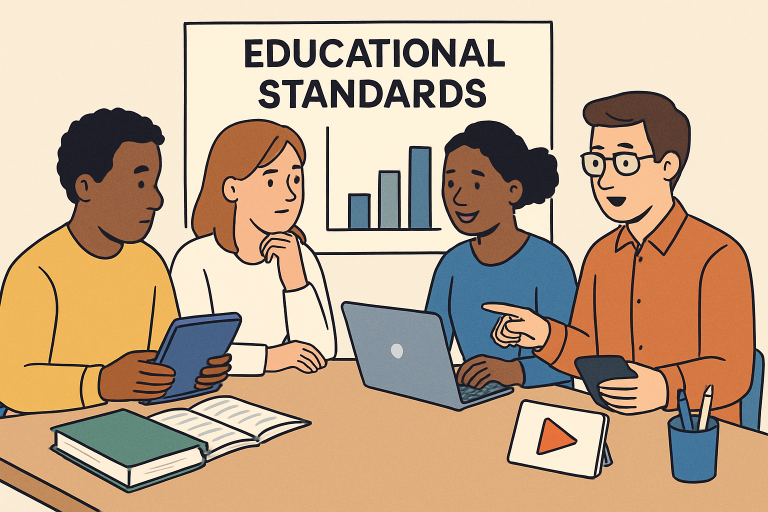
Implementing new educational standards often requires coordinated efforts among teaching teams. MSEd graduates are well-prepared to lead professional learning communities, share expertise, and build consensus around instructional shifts. Leadership modules in many MSEd programs foster skills for mentoring peers, managing change, and engaging parents and stakeholders in the educational process. This collaborative mindset enhances consistency and leads to identifying and spreading best practices throughout an entire school or district.
Integrating Technology in the Classroom
With technology now integral to most state standards, educators must be adept at leveraging digital tools for learning. Northwest Missouri State University highlights that MSEd programs provide hands-on experience with classroom technology, from online collaboration platforms to adaptive assessment tools. This training helps educators foster digital literacy, personalize instruction, and facilitate student-centered, interactive learning experiences. The effective integration of educational technology contributes to improved engagement and more robust learning outcomes—skills increasingly demanded in today’s digital-first classrooms.
Addressing Diverse Learner Needs
New educational standards stress equity and access for all students, regardless of their backgrounds or learning abilities. An MSEd curriculum includes robust training on differentiated instruction, universal design for learning, and culturally responsive teaching methods. This enables educators to tailor their instruction for students with disabilities, English language learners, and gifted students, ensuring everyone benefits from a rich and personalized educational experience.
Staying Informed and Proactive
Lifelong learning is a hallmark of effective educators. MSEd graduates are not just prepared for current expectations—they also build habits of reflection and inquiry that prepare them for future changes in the profession. By keeping up with research, policy updates, and innovations in teaching, MSEd-trained educators embrace a proactive approach to their careers, fully prepared to adapt to whatever standards come next.
Final Thoughts
Earning a Master of Science in Education is a strategic investment for teachers looking to stay ahead in a field defined by continual change. Through advanced instruction in pedagogy, metacognition, collaboration, technology integration, and diverse student support, MSEd graduates are ready to help their schools exceed evolving standards. This dedication enhances student outcomes and promotes a more adaptable, reflective, and inclusive educational community for all.
Post HTML