

How Much Money in the World Is Artificial
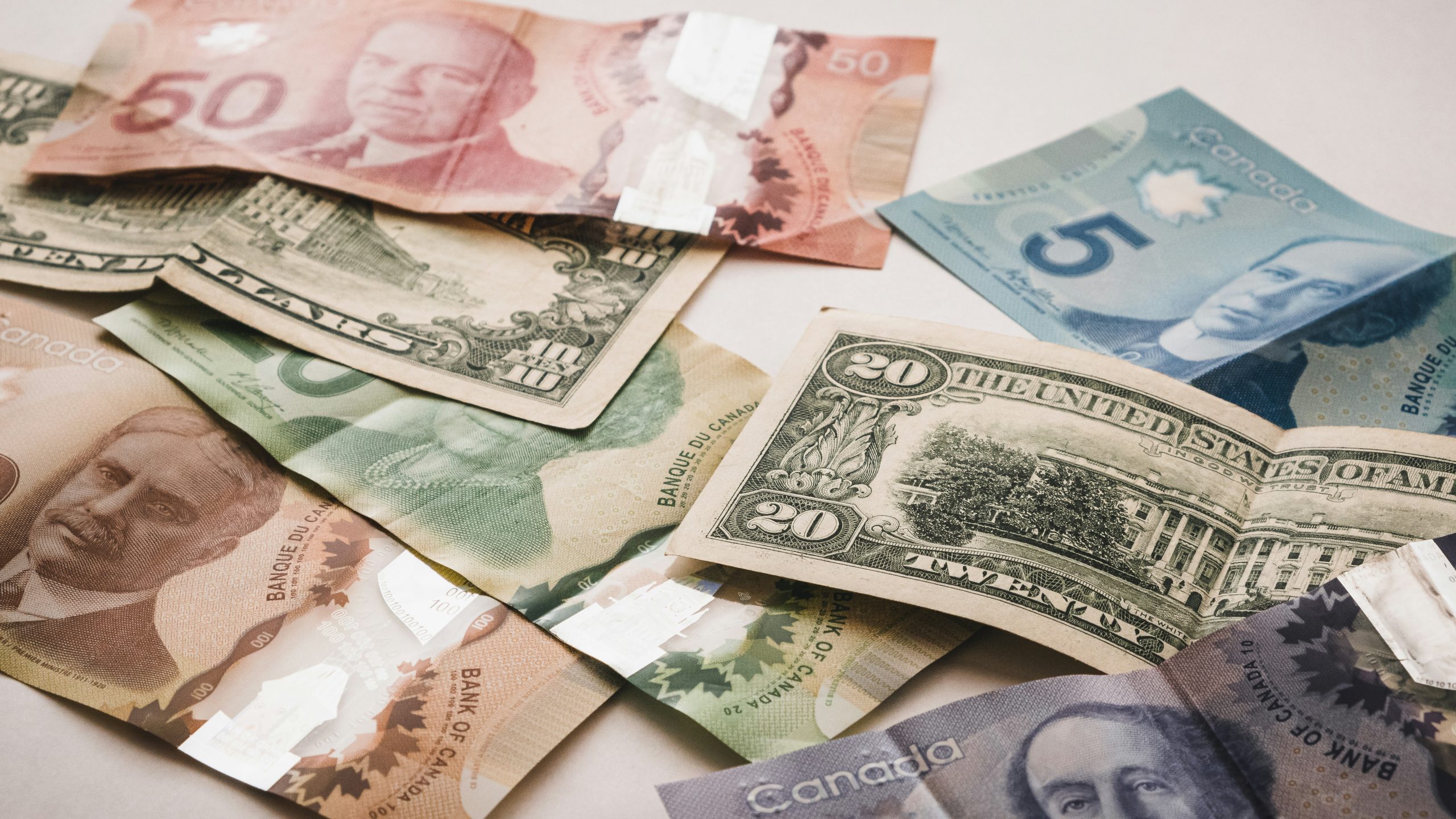
Most people think of money as something solid. Cash in your wallet, numbers in your account, maybe gold sitting in a vault somewhere. It feels real because we use it every day. But if you zoom out, the picture starts to change. Most of the money in the world doesn’t exist as physical cash. It exists as entries on balance sheets, as loans, as claims, as agreements between parties. The system works because everyone accepts those claims as money.
That raises a simple question. If most of what we call money is created through credit, contracts, and accounting entries, then how much of the world’s money is “real” in the way people imagine it?
What Counts as “Real” Money Today?
Most people think of money as cash. Notes, coins, something physical. But that’s only a small part of the system.
Take the United States as a simple example. Total money supply (M2) is around $22 trillion, while physical cash in circulation is roughly $2.4 trillion. That means less than 10–11% of money exists as paper currency. The rest sits as digital balances in bank accounts.
Those balances are not stacks of cash waiting somewhere. They are bank deposits, which are technically claims on a bank. You can use them like money, transfer them, spend them, but they exist as entries in a system rather than physical assets.
Central banks like the Bank of England openly explain that most money today is created by commercial banks through lending, not by printing.
So, when we talk about “real” money, it depends on the definition.
If real means physical, then it’s a small fraction.
If real means accepted and usable, then most of today’s money clearly qualifies.
That gap between physical cash and digital claims is where the modern system really begins.
How Banks Multiply Money
Once you accept that most money is not physical, the next step becomes clearer. Banks don’t just store money, they expand it.
When a bank issues a loan, it creates a new deposit in the borrower’s account. That deposit becomes part of the money supply. This is how the system grows over time.
You can see the result in the numbers. In the U.S., money supply is around $22 trillion, while total bank credit is much larger and continues to expand alongside it. Globally, total debt has reached roughly $250 trillion, showing how much of today’s financial system is built on credit rather than existing cash.
Institutions like the Bank of England explain this clearly: most money is created when banks lend.
Of course, this process has limits. Capital rules, interest rates, and risk management all act as constraints. But the core idea is simple. The system does not grow by printing more cash. It grows by creating more credit.
A World Built on Debt
Once money is created through lending, debt naturally becomes the foundation of the system.
Today, the scale is hard to ignore. Global debt has reached around $250 trillion, which is more than two times the size of the entire world economy. Governments, companies, and households are all part of this structure. From mortgages and credit cards to corporate bonds and sovereign borrowing, nearly every layer of the economy runs on borrowed money.
For governments, debt finances are spending beyond tax revenues. For companies, it supports expansion and operations. For individuals, it makes large purchases possible. In each case, future income is brought forward into the present.
This is why debt keeps growing alongside the economy. The system is designed to expand through credit. If borrowing continues and obligations are met, the structure holds together.
But it also means that a large share of what we call wealth exists as claims on future cash flows, not as immediately available resources.
Gold, Oil, and the Rise of Paper Markets
The same logic extends beyond money into real-world assets like gold and oil.
Take gold. The amount of paper gold exposure traded daily is many times larger than the physical metal that moves. Even when traders follow spot gold prices as a reference point, much of the underlying activity still comes from derivative and credit-based markets. In places like London, a large share of trade happens through unallocated gold, which is essentially a claim on gold rather than specific bars. It works efficiently for liquidity, but it also means not every position represents physical ownership.
Oil follows a similar pattern. Global oil consumption is around 100 million barrels per day, yet futures markets trade volumes far above that. Most of these contracts are never settled with physical delivery. They are opened, traded, and closed based on price movements.
This doesn’t make the system useless. In fact, it allows producers, refiners, and traders to hedge risk and manage exposure. But it also creates a layer where financial contracts become larger than the underlying physical market.
So, prices are often driven by flows in paper markets first, while the physical side reacts later.
Why the System Needs This Multiplication
This structure exists for a reason. Without credit expansion and contract-based markets, the modern economy would be much smaller and slower.
Bank lending allows businesses to invest, governments to spend, and individuals to buy homes or start companies without waiting years to accumulate cash. That’s how a global economy with hundreds of trillions in activity keeps moving.
In the same way, futures and derivatives markets let participants manage risk. Airlines hedge fuel, producers lock in prices, and investors gain exposure without needing to handle physical assets. Financial institutions like banks, funds, and FX brokers play a key role in connecting these flows, providing access, pricing, and execution across global markets. The scale reflects this demand. Global derivatives notional exposure has reached around $800+ trillion, far beyond the size of the underlying physical markets.
Institutions like the Bank for International Settlements highlight that these markets play a key role in liquidity and risk transfer.
Where Fragility Begins
The system works as long as confidence holds, and the chain of obligations keeps moving. Problems start when too many claims depend on the same underlying assets, or when liquidity suddenly disappears. Because the structure is built on credit and contracts, stress can spread faster than in a purely physical system.
- Too much leverage built on the same collateral
- Liquidity dries up when everyone wants to exit at once
- Counterparty risk increases as chains get longer
- Debt rollover becomes harder when rates rise
- Paper claims exceed what can be physically delivered
- Pricing disconnects from real supply and demand
- Trust weakens, and the system slows down fast
Conclusion: A System of Promises
Modern finance works because it multiplies access to money, credit, and markets. It allows economies to grow faster than they could using only physical cash or direct ownership of assets. But at its core, this is still a system built on promises.
So how much of the world’s money is artificial? If we define it as money created through credit, deposits, and contractual claims rather than physical cash, then a large share of it falls into that category. Most of what we use eery day exists as entries in a system, not as something tangible.
That doesn’t make it useless. It makes it dependent. The more the system expands through layers of debt and paper claims, the more it relies on confidence between participants.
And that is the key point. This system can grow fast, scale globally, and operate efficiently. But in the end, it holds together for one reason: trust.